Improving sustainability doesn’t always require major capital investment or fundamental changes to manufacturing processes. Sometimes, meaningful gains can be achieved simply by making smarter use of existing equipment.
To reduce unnecessary energy consumption while maintaining reliable furnace operation, Boro Foundry partnered with Meltech to modernise its induction furnace cooling process.
The result is a more efficient, demand-led cooling system that has reduced electricity consumption, lowered equipment wear and delivered an estimated annual saving of £5,448.
The Challenge
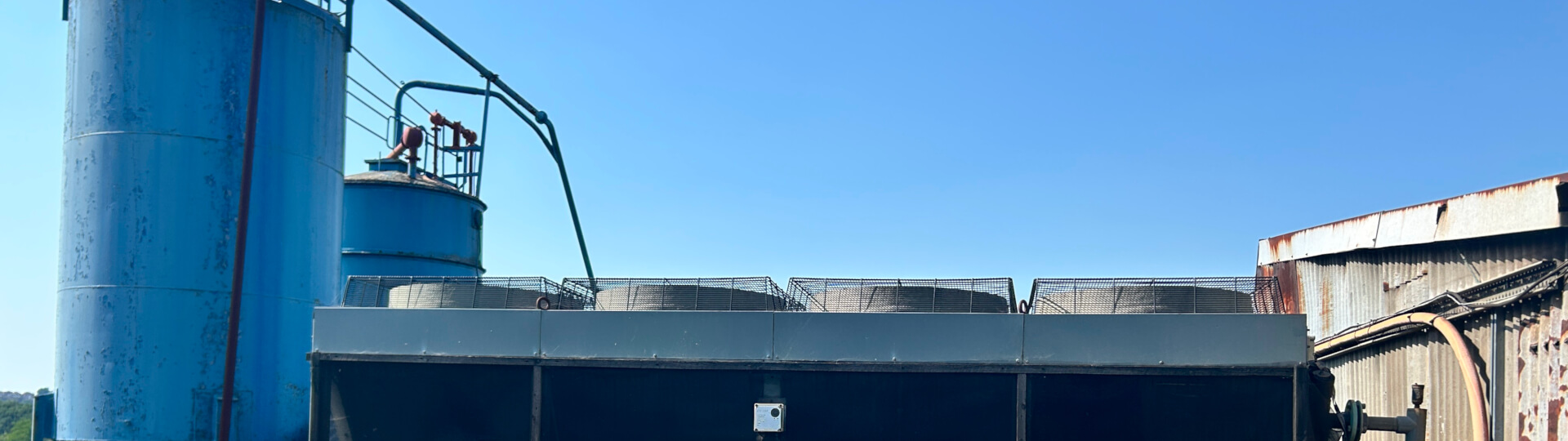
At Boro Foundry, induction furnaces play a critical role in day-to-day production. Like many induction melting systems, the furnaces rely on a circulating water cooling system. Water is pumped through the furnace coil, before passing through external cooling fans and re-circulated back into the system. This cooling process is essential for maintaining the performance, reliability and longevity of furnace equipment.
For many years, the cooling process was controlled using a fixed six-hour run-on period after production had finished. While this ensured the furnace remained adequately cooled, it also meant the pumps and fans continued operating, regardless of whether cooling was still required.
The opportunity for improvement arose after staff noticed the cooling fans continuing to run on warm days when no melting was taking place. After further investigation into how the system was being controlled, it became clear that Boro Foundry could reduce unnecessary energy use by introducing a more intelligent, demand-led cooling process.
The Solution
Boro worked closely with Meltech, a specialist induction furnace technology supplier. Meltech managed the project from start to finish, drawing on experience from another foundry that had already implemented similar technology, and delivered a complete solution that included system design, PLC programming, installation and commissioning.
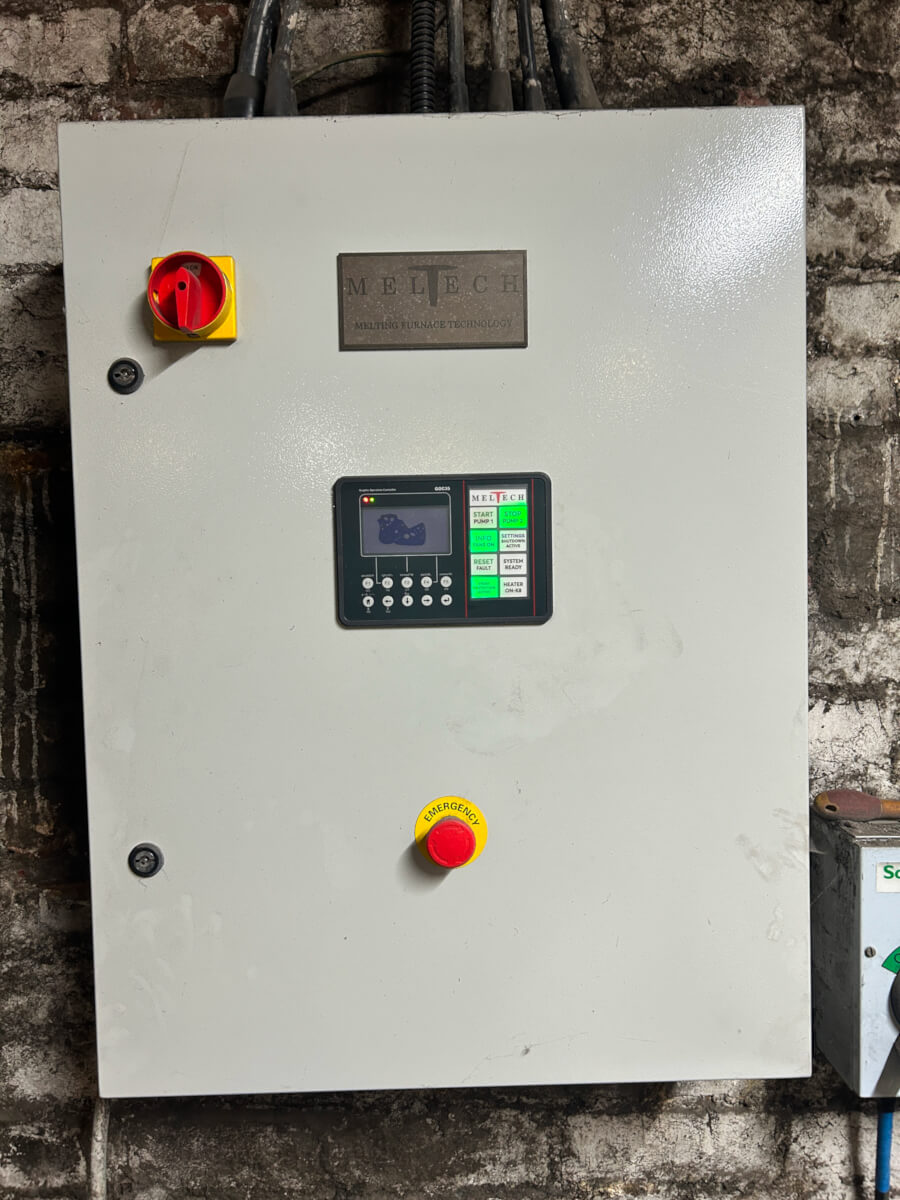
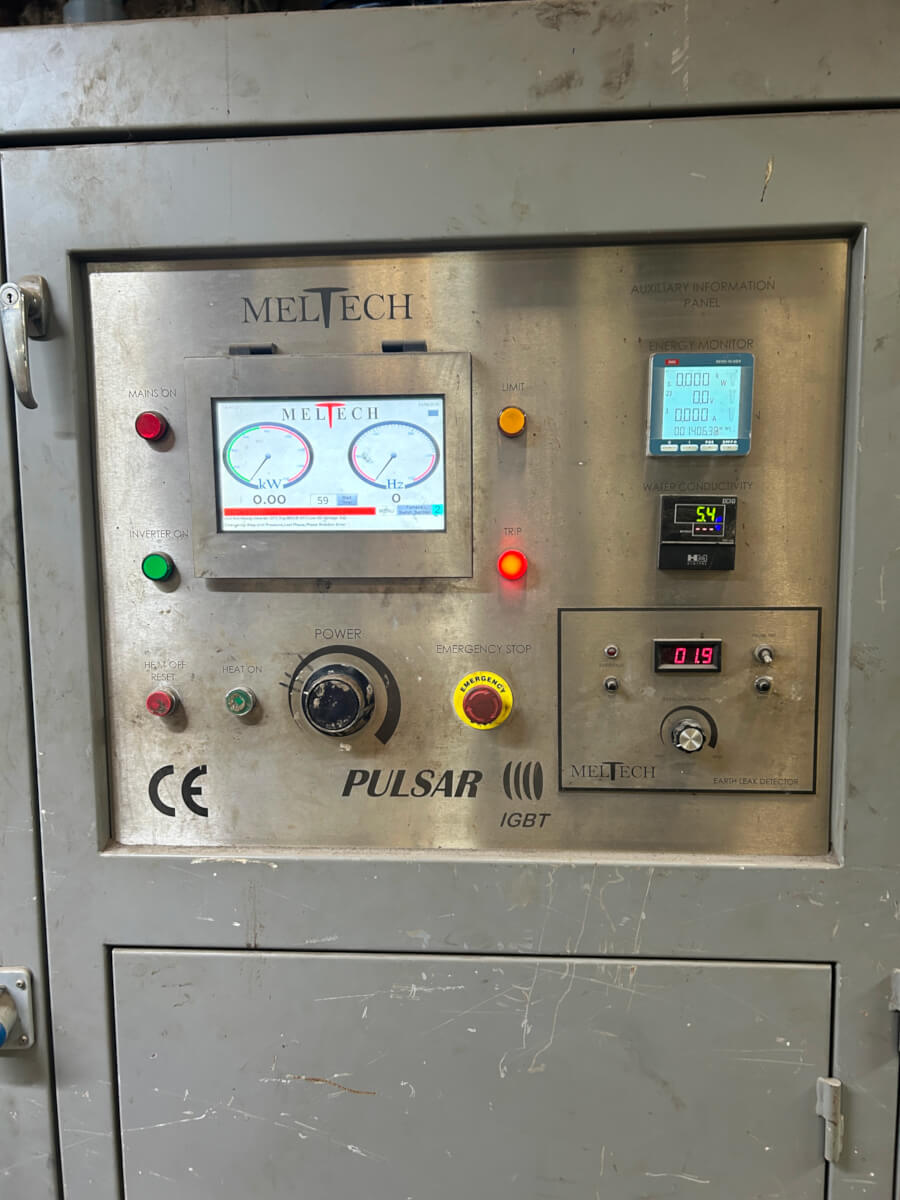
The upgrade centred around the installation of a Meltech PLC control system integrated with the Pulsar IGBT inverter. This enables communication between the inverter and cooling system, allowing cooling operations to respond to actual demand rather than operating for a fixed period after production.
The upgraded system provides:
- Communication between the cooling system and inverter
- Demand-based cooling control
- Independent fan control
- Automatic shutdown once sufficient cooling has been achieved
Rather than relying on a fixed timer, the system now continuously monitors cooling requirements and automatically switches equipment off once cooling is complete, ensuring energy is only used when genuinely needed.
Delivering Measurable Results
The difference has been immediate:
- Reduced operating time – This demand led system has reduced the unnecessary runtime of the cooling pumps and fans from 6 hours after production to 30 minutes, approximately 5.5 hours every day.
- Energy savings – With a connected cooling system load of 22.43 kW and electricity costed at £0.24 per kWh, this reduction in operating time delivers estimated annual electricity savings of £5,448, based on a four-day production week across forty-six operating weeks each year.
- Reduction in maintenance costs – With pumps, motors and cooling fans operating for substantially fewer hours, mechanical wear has been reduced, helping lower maintenance requirements while extending the lifespan of critical equipment.
Based on the total investment for the project, the system is on track to achieve full payback within approximately 2.45 years.
Supporting Sustainability Through Smarter Engineering
Projects like this demonstrate that improving sustainability within heavy industry isn’t always about replacing equipment or investing in entirely new manufacturing processes. Sometimes, the greatest gains come from making existing systems work more intelligently.
By replacing a fixed operating schedule with demand-based control, Boro Foundry has significantly reduced unnecessary electricity consumption while improving operational efficiency and reducing wear on essential equipment.
The project forms part of Boro Foundry’s ongoing commitment to investing in practical engineering improvements that support long-term sustainability, operational reliability and continuous improvement across its foundry operations.
“Improving efficiency isn’t always about major capital investment; sometimes it’s about making smarter use of the systems we already have. This solution has enabled us to better align energy use with actual demand, reducing unnecessary waste while supporting the long-term sustainability of our operations.”
Sam Edwards
Sales Director, Boro Foundry Ltd.
Reducing Costs. Improving Sustainability.
Every manufacturing operation faces increasing pressure to reduce energy consumption, improve efficiency and make better use of existing resources. Often, the most effective improvements come from identifying smarter ways to optimise the systems already in place.
Get in touch with Boro Foundry to discover how our commitment to continuous improvement and engineering excellence helps deliver better outcomes for our customers and our business.